
A construction mortgage in Alberta pays your builder in stages, called progress draws, as each part of the house passes inspection. You pay variable interest only on what's been drawn. On 28 October 2026 the Bank of Canada raised its key rate a quarter point, to 2.5% (Bank of Canada). Every dollar drawn now costs more to carry.
The hike was the central bank's first increase in over three years (Ratehub, 2026). This guide is general information, not financial advice. Rates, draw schedules and terms vary by lender, so confirm yours with the lender before you sign a build contract.
Key takeaways
- Draws follow the build. Each draw pays for a finished, inspected stage, and you pay interest only until move-in (Royal Bank of Canada, 2026).
- The rate floats. Construction loans use a floating rate (Canadian Press, 2026), so the hike reaches a build in progress right away.
- Building may cost more too. Energy and import costs are expected to rise.
- Alberta has its own rules. New homes need a warranty and a licensed builder (Government of Alberta).
- Late changes cost twice. You pay the change order and the extra interest.
How does a construction mortgage work in Alberta?
The lender approves the full amount up front, then pays it out in pieces as the build reaches set milestones. Before each draw, an inspector confirms the stage is finished.
Royal Bank of Canada (RBC) publishes a five-draw example. The first draw is based on the lot, at up to 65% of its appraised value. The later draws follow the main stages of the build (RBC, 2026):
| Draw (RBC example) | Released when | What you pay meanwhile |
|---|---|---|
| 1 | The lot is appraised; up to 65% of its value | Interest only, on the amount drawn |
| 2 | Foundation and backfill are done and inspected | Interest only, on a larger balance |
| 3 | Framing, roof, doors and windows are done and inspected | Interest only, on a larger balance |
| 4 | Electrical, plumbing, insulation and siding are done and inspected | Interest only, on a larger balance |
| 5 | The home is 100% complete | Regular payments start one month after completion |
The bank holds back part of each draw for a period set by provincial rules. In Alberta, the owner keeps back 10% under the Prompt Payment and Construction Lien Act. That money generally stays held for at least 60 days after the work is substantially done (McCarthy Tétrault, 2024).
You also pay for the inspections. Some banks take the appraisal and inspection fees out of each draw (Ratehub, 2022).
What does the 28 October 2026 rate hike do to a construction mortgage?
The hike raises the interest on every dollar you've already drawn, starting now. The policy rate went from 2.25% to 2.5%. Ratehub reported that the prime rate would rise by the same 25 basis points (Ratehub, 2026).
Construction loans are floating-rate (Canadian Press, 2026). Here's what the hike alone adds. Your lender's margin over prime comes on top.
| Amount drawn so far | Extra interest per year | Per month |
|---|---|---|
| $100,000 | $250 | About $21 |
| $300,000 | $750 | $62.50 |
| $500,000 | $1,250 | About $104 |
The extra interest grows as the draws do. Your balance is smallest after the lot draw. It's largest in the last months, when it's paying for framing, rough-ins and finishes.
Fixed rates are a separate question. As of 28 October 2026, the lowest five-year fixed rate was 4.34%. The lowest variable rate rose from 3.45% to 3.70%.
Fixed rates were largely unaffected, because they had already risen with the bond market. The build itself may cost more, too: the central bank expects higher energy and import costs to raise what it costs to build homes (Canadian Press, 2026).
Ask your lender when you can lock the rate on the permanent mortgage. The next rate decision is on 9 December 2026.
Progress-draw vs completion mortgage: which fits a custom build?
For a custom home on your own lot, it's usually a progress-draw mortgage. A completion mortgage pays nothing during the build. It pays the full amount on the day you take possession (Sterling Homes, 2024). That suits a finished home you buy from a builder.
| Progress-draw mortgage | Completion mortgage | |
|---|---|---|
| When money is paid out | In stages, as each stage passes inspection | All at once, on possession day |
| Who pays for the build meanwhile | You, through the draws | Not your mortgage; nothing funds until possession |
| What you pay during the build | Interest only, on the amount drawn | Nothing on the mortgage until it funds |
| A floating-rate rise mid-build | Hits the drawn balance | Doesn't touch a mortgage that hasn't funded |
| Usual fit | Custom home on your own lot | A builder's spec or presale home |
If you own the lot and hire the builder, your lender pays for the house one stage at a time. That's the job a draw mortgage does. Ask your builder which kind their contracts expect before you choose a lender.
What do Alberta lenders require?
Expect a down payment, a signed contract with a licensed builder, warranty enrolment and an inspection before each draw. The details vary by lender. The Canada Mortgage and Housing Corporation (CMHC) insures many of these loans and sets rules for them.
| Requirement | What the sources say |
|---|---|
| Down payment | RBC's example assumes 20% down. For an insured loan on a one- or two-unit home you live in, CMHC's minimum is 5% of the first $500,000 and 10% of the rest (CMHC) |
| Approval timing | For insured new construction, approval comes before work starts or at an early stage |
| Land | You must own the lot by the first advance. CMHC doesn't allow advances on vacant land |
| Builder contract | CMHC accepts a contract with one builder, or a home you build yourself |
| Licensed builder and warranty | Required for Alberta permits issued since 1 December 2017, unless you're an authorized owner builder (Government of Alberta) |
| Building permit | The City issues it before work starts. See the Calgary building permit guide and how long a new home permit takes |
| Draw inspections | Each draw after the lot follows a finished, inspected stage (RBC, 2026) |
Alberta's warranty runs one year on labour and materials and two years on delivery and distribution systems. It runs five years on the building envelope and ten on the main structure.
Timing has a limit too. In RBC's example, the foundation must be finished within 180 days of the first draw. A slow permit can eat into that, so ask each lender for its written draw schedule, fees and deadlines.
For the budget, the custom home cost guide shows what a Calgary build costs before land, tax and contingency.
How do mid-build changes add draws and interest?
A change after work starts adds a change order, and it can push back the next draw. Each draw waits for an inspected stage. While it waits, you keep paying interest on what's already drawn.
First, the builder prices the change. A Calgary contractor's 2026 guide puts moving a framed wall at $1,500 to $3,000, markup included (contractor guide). The guide to moving a wall after framing covers other changes.
The budget may not stretch. Before you sign a change order, ask your lender whether the extra cost can go on the mortgage or has to come from savings.
The schedule slips. If framing or rough-ins take longer, the next inspection and draw move with them. On a rate that just went up, a longer build at a higher balance costs more.
Some changes aren't your choice, like a fix an inspector asks for. The ones you do choose cost least before the first draw.
What should you settle on the plan before the first draw?
Settle anything that changes structure, plumbing, stairs or the size of the house. Those set the contract price, the lender's budget and the permit drawings. Changing them later reopens all three.
| Settle before the first draw | Why it matters to the mortgage |
|---|---|
| Overall size and room layout | Sets the build cost the lender approves |
| Load-bearing walls and beams | Changing them later needs an engineer and new framing |
| Stair location | Hard to move once the floors around it are framed |
| Kitchen and bathroom plumbing | Moves the rough-ins, which come before a draw |
| Window and door openings | Set at framing, a draw stage in RBC's example |
Walk through your daily routines on the plan, like carrying groceries in, a busy morning in the kitchen, or getting a couch up the stairs. Each one tests a room's size and the path between rooms.
Where a full-size walkthrough fits
Before permits and before the first draw, while the plan is still on paper.
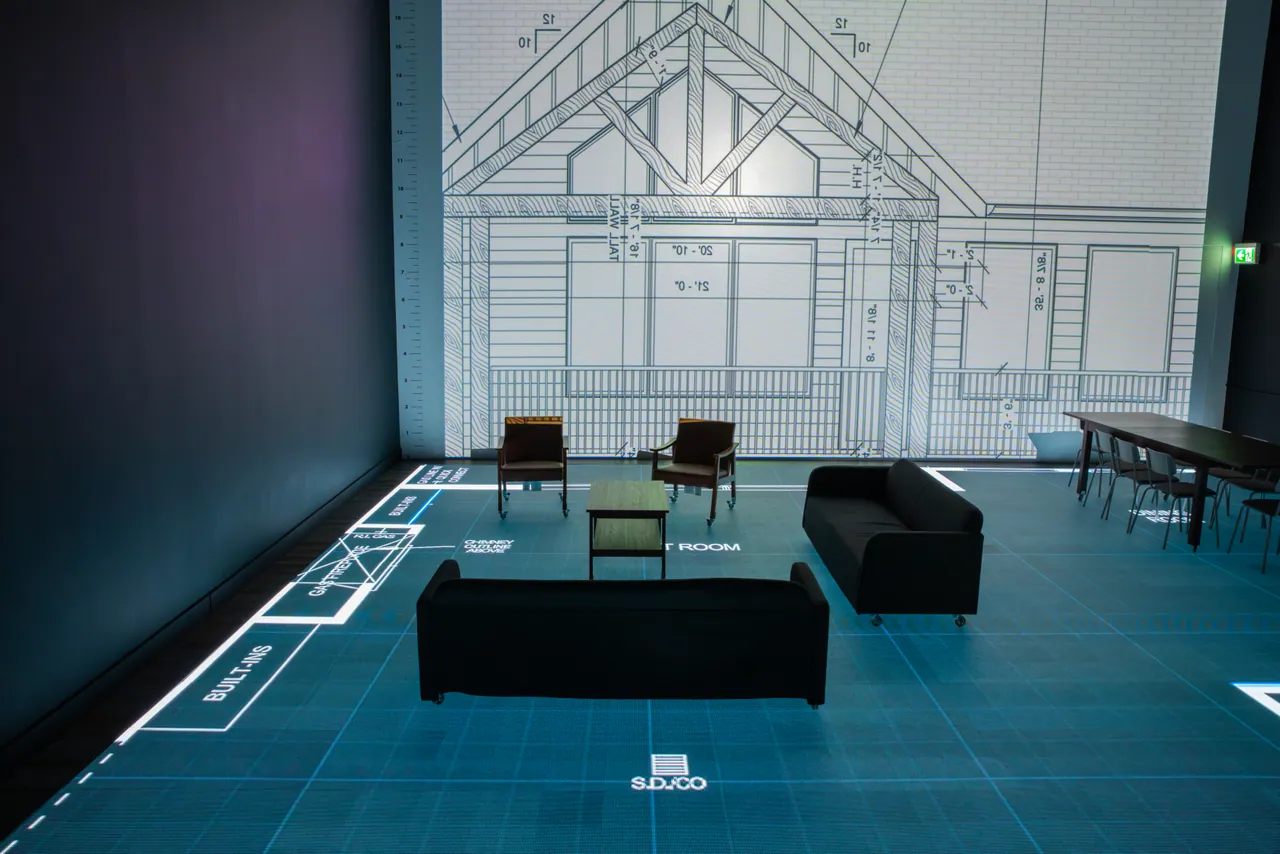
At 1to1 Plans Calgary, your floor plan lights up at full size on a floor you can walk on, with room names and dimension lines. You walk it room by room and move the studio's furniture around. Your designer updates the drawings afterwards (how it works). You keep a recording of the session.
Sessions are quoted per plan, the quote is free, and there's nothing to pay at booking. See the homeowners page or book a session.
Questions
Can you get a construction mortgage with 5% down in Alberta?
Sometimes. If the home qualifies for CMHC insurance and you'll live in it, the minimum down payment starts at 5% (CMHC). It rises to 10% on the part above $500,000. Not every lender offers insured draw loans. RBC's example assumes 20% down, so ask your lender which applies.
Do you pay interest during construction?
Yes, usually interest only, on the amount drawn so far. RBC asks for monthly interest-only payments during the build. Regular payments start one month after the home is finished (RBC, 2026). The payment grows with each draw.
Is a construction mortgage fixed or variable?
During the build, construction loans use a floating rate (Canadian Press, 2026). The permanent mortgage you move to at the end can be fixed or variable. Ask your lender when you can lock that rate.
Who pays for the draw inspections?
You do. Some banks take the appraisal and inspection fees out of each draw (Ratehub, 2022). Ask for the fee per draw in writing before you choose a lender.
What happens if the build goes over budget?
You still owe the change order, and your lender approved a set amount. Ask in advance whether an increase can go on the mortgage or must come from savings. One Calgary contractor builds an 8% to 12% contingency into its fixed-price basement jobs.
Sources
- Bank of Canada bankofcanada.ca
- Ratehub, 2026 ratehub.ca
- Royal Bank of Canada, 2026 rbcroyalbank.com
- Canadian Press, 2026 advisor.ca
- Government of Alberta alberta.ca
- McCarthy Tétrault, 2024 mccarthy.ca
- Ratehub, 2022 ratehub.ca
- Sterling Homes, 2024 sterlingedmonton.com
- CMHC cmhc-schl.gc.ca
- contractor guide oafconstruction.ca